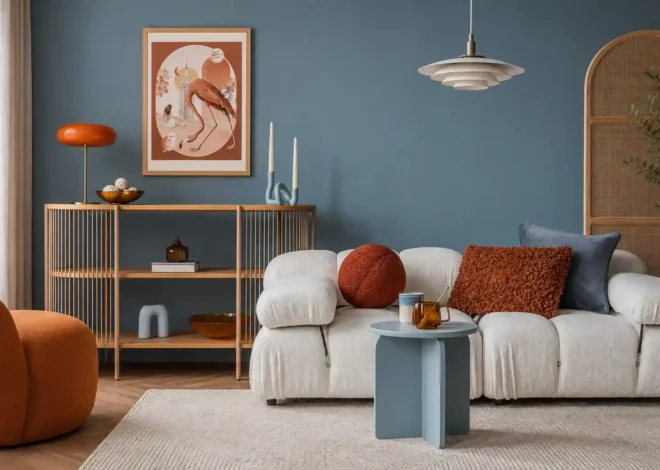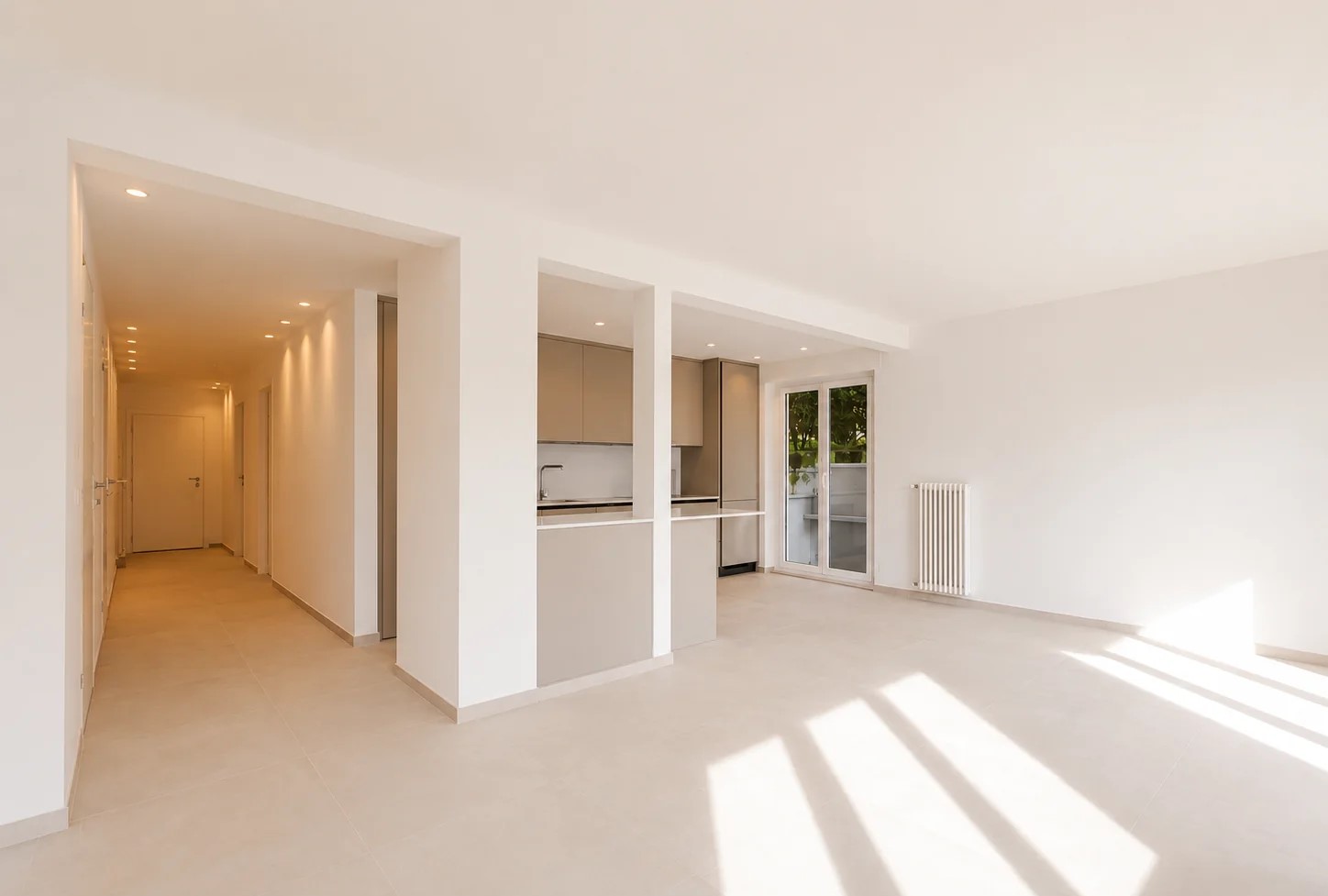
Vastu Tips for a Home that Optimizes Corners
@font-face { font-family: ‘Heading2Font’; src: url(‘ format(‘opentype’); }
@font-face { font-family: ‘NOTOSANSREGULAR’; src: url(‘ format(‘truetype’); }
body { font-size: 15px !important; font family: ‘NOTOSANSREGULAR’; line-height: 1.7; }
h2 { font-family: ‘Heading2Font’; font size: 23px; line-height: 32px; bottom margin: 12 px; }
h3 { font-family: ‘Heading2Font’; font size: 20px; line-height: 28px; bottom margin: 10 px; }
.toc-container { border: 1px solid #e5e5e5; padding: 20px; border-radius: 12px; background: #fafafa; margin: 20px 0; }
Every house has a few awkward spots: the corner next to the closet that collects bags and charger cables, the passage between the bedroom and bathroom that no one thinks about, or the alcove that was never deep enough for a shelf but too prominent to ignore.
Standard Vastu tips for home design cover the big decisions: entryway location, kitchen orientation, and bedroom orientation. What they rarely address is what to do with the spaces that fall between these defined areas. And in Vastu, what you don’t know matters as much as what you plan.
Why are these spaces more important than you think?
In Vastu for home design, energy moves through a space like air does. He needs clear paths, focused areas and space to move around. Corners and passages are part of this circulation network. When blocked, cluttered, or simply left unintentional, they create points of stagnation.
Vastu Shastra tips consistently emphasize that every part of a house should have a function. Not necessarily a decorative function, but a defined function. A corner that collects clutter is not a neutral space. It actively accumulates stagnant energy in a location that may be within a directionally significant area.
A northeast corner blocked, even by something as ordinary as a pile of stored items, is one of the most common Vastu violations for homes. The same goes for the dark and narrow passages that no one thinks about.
Why corners are the most neglected areas in Vastu?
Not all corners are equally important. House design according to Vastu treats the four main corners as being responsible for direction: northeast, northwest, southeast and southwest. Each corresponds to specific elements and energies.
- Northeast corners should be as open and uncluttered as possible. No heavy storage, no dark furniture, no accumulated objects. If that corner has become a dumping ground, cleaning it up is one of the simplest and most effective Vastu tips available for home improvement.
- The southwest corners benefit from weight and stability. A heavy piece of furniture, a built-in storage unit, or even a large plant work well here. This is the only corner where a certain visual density is considered favorable.
- The southeast corners are associated with the energy of fire. A lamp, candle holder or warm-toned lighting in this corner activates it appropriately without creating clutter.
- The northwest corners are associated with movement and air. Keeping them lighter, with minimal furniture and good ventilation, aligns with directional energy.
Why do passage transition spaces have real Vastu implications?
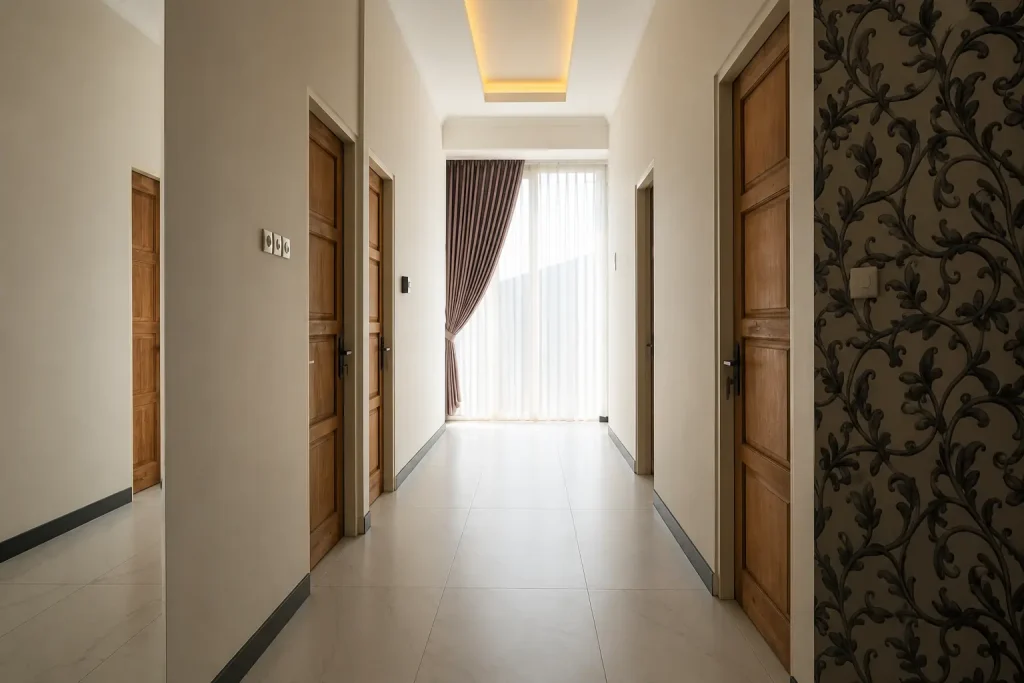
Passages are movement zones. Vastu Shastra for houses treats them as channels through which energy flows between rooms. A dark and narrow passage, without lighting and without defined objective, slows down this movement.
Practical Vastu tips for homes that work include:
-
Lighting at low and medium levels, not just on the ceiling
A wall light or floor lamp in a passage completely changes the quality of the space.
-
A single functional element
This can be a narrow console, a row of hooks or a small shelf. This gives the passage a reason to exist beyond transit.
-
Avoid mirrors facing each other in a passageway
Opposite mirrors are considered a Vastu concern because they can bounce energy indefinitely rather than deliberately circulating it.
-
Keep the ground clear
Walk-through floors that accumulate shoes, bags or furniture legs create both a physical and energetic obstruction.
How can Vastu for Homes deal with dead zones and awkward alcoves?
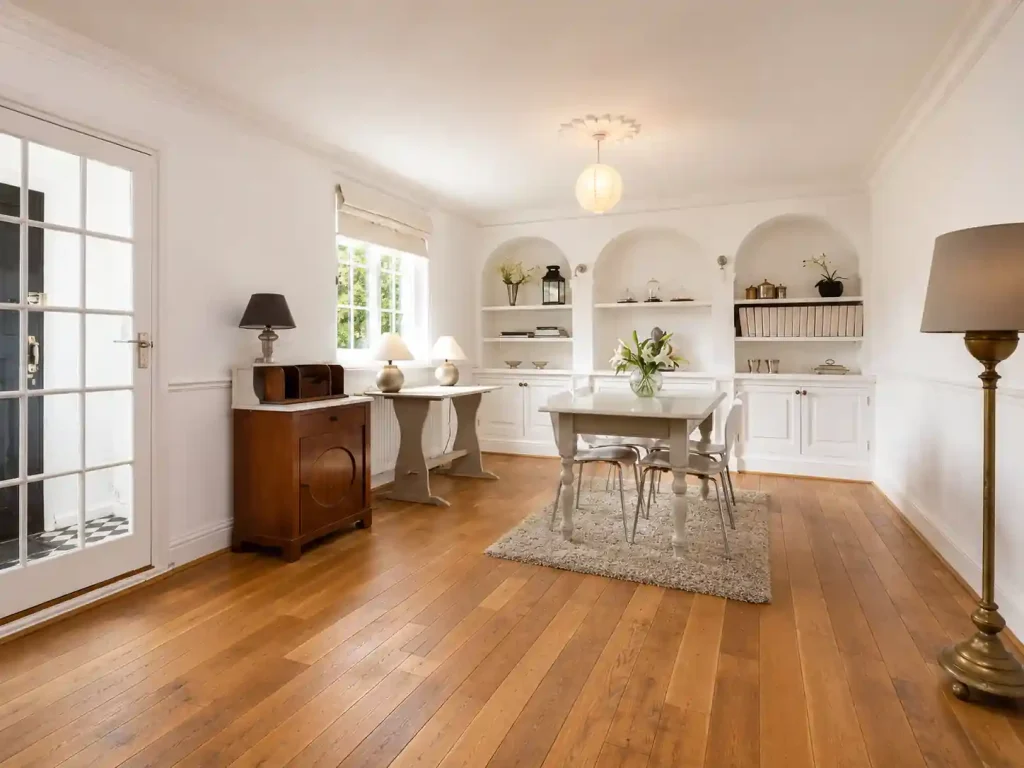
These are the spaces that Vastu tips for homes rarely address. The space under a staircase that isn’t quite a room, the built-in wall that’s too shallow for a cabinet, the space between two doors that can’t hold furniture.
The risk with these spaces is twofold. Left empty, they pick up the mess. Too dressed with decorative objects that serve no purpose, they are visually busy without adding anything.
The best approach:
- Built-in storage designed specifically for the dimensions of the space. A shallow alcove that cannot accommodate a cabinet can contain open shelving or a display niche.
- Intentional lighting that makes the space look thoughtful rather than abandoned.
- Plants in corners that can’t hold furniture. A well-placed plant activates a corner, introduces living energy and requires no structural intervention.
- Avoid using these areas to store broken, unused or unloved items. This is one of the most consistent Vastu tips for homes: Objects you cling to aimlessly accumulate stagnant energy over time.
How Bonito Designs deals with what other designers leave behind
Most design briefs focus on the main parts. Corners, passages, and difficult areas are resolved at runtime, which usually means they are not resolved at all. Bonito Designs approaches this differently:
- Each area of the floor plan is considered in the specification, including transitional and residual spaces.
- Vastu for homes is considered for every directional corner, not just the main rooms
- Passageway lighting, alcove storage, and dead zone activation are treated as design problems with real solutions, not afterthoughts.
- The Life Design process maps how residents actually move around the home and naturally makes the best use of these neglected spaces.
With in-house execution and ISO-certified processes in homes across Mumbai and Bangalore, these decisions are made as designed rather than resolved on-site without context.
The spaces you ignore shape the home you live in
Vastu tips for homes that only address the main areas miss an important part of the picture. The corners, the passages, the alcoves that seemed too small to matter, these are the spaces where daily frictions accumulate and where energy stagnates most surely.
Vastu Shastra advice is ultimately a framework for intentionality. Every part of the house deserves a defined purpose. Those who do not yet have one are simply waiting for a decision.
If you want your entire home planned with this level of attention, book a consultation with Bonito Designs today.
PakarPBN
A Private Blog Network (PBN) is a collection of websites that are controlled by a single individual or organization and used primarily to build backlinks to a “money site” in order to influence its ranking in search engines such as Google. The core idea behind a PBN is based on the importance of backlinks in Google’s ranking algorithm. Since Google views backlinks as signals of authority and trust, some website owners attempt to artificially create these signals through a controlled network of sites.
In a typical PBN setup, the owner acquires expired or aged domains that already have existing authority, backlinks, and history. These domains are rebuilt with new content and hosted separately, often using different IP addresses, hosting providers, themes, and ownership details to make them appear unrelated. Within the content published on these sites, links are strategically placed that point to the main website the owner wants to rank higher. By doing this, the owner attempts to pass link equity (also known as “link juice”) from the PBN sites to the target website.
The purpose of a PBN is to give the impression that the target website is naturally earning links from multiple independent sources. If done effectively, this can temporarily improve keyword rankings, increase organic visibility, and drive more traffic from search results.

Related Posts
15 Stylish Balcony Decoration Ideas for Modern Urban Homes
How Home Interior Design Shapes Your Mood