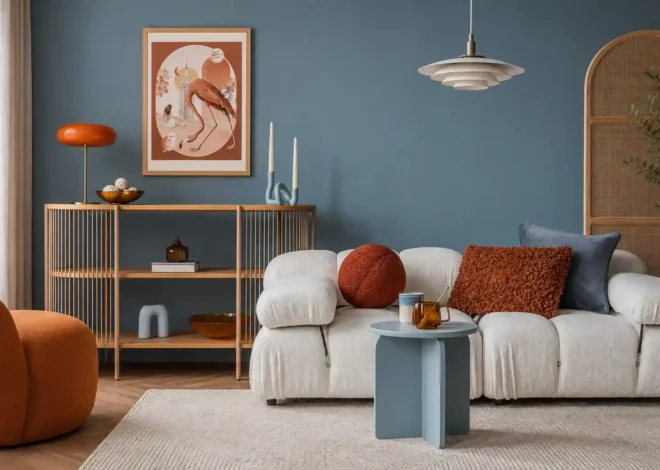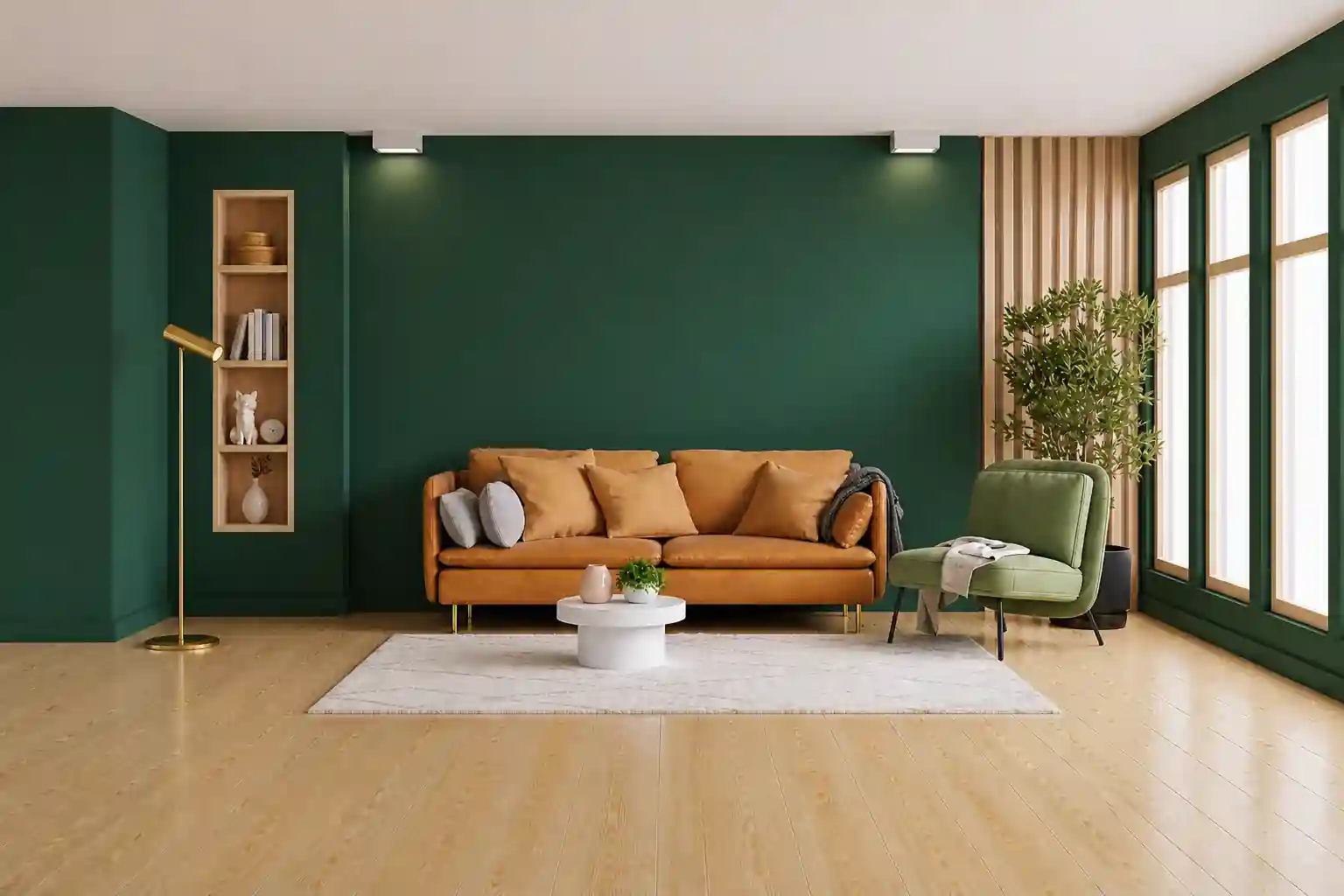
Warm or cool colors? How to Choose the Right Interior Color Combination for Your Home
ol > li { position: relative; padding left: 25 px; bottom margin: 10 px; counterincrement: item; }
ol > li::before { content: counter(item) “.”; position: absolute; left: 0; }
ul li::before { content: “”; position: absolute; left: 0; top: 8px; width: 6px; height: 6px; background: #000; border radius: 50%; }
.toc-container { border: 1px solid #e5e5e5; padding: 20px; border-radius: 12px; background: #fafafa; margin: 20px 0; }
.blog_content_con div { margin-bottom: 5px !important; } .blog_content_con p { margin: 0 0 6px 0 !important; }
Interior color schemes not only shape the way a home looks, but also how it feels every day. Warm tones create energy and intimacy, while cool tones bring calm and make spaces feel larger. The right choice depends on room size, lighting and usage rather than fixed rules. A balanced mix of warm and cool elements helps create a functional, comfortable and visually appealing home.
Walk into any home and you feel the colors before you even notice the furniture. Some spaces feel instantly comfortable. Others feel airy, calm, or almost silent. This feeling usually comes down to one decision that most homeowners overthink and get stuck on: the interior color scheme.
You don’t just choose shades, you decide how your home will feel on a rushed Monday morning, during a lazy Sunday nap, or when guests arrive unexpectedly. So let’s go over the basics of interior color schemes to help you find the best ambiance for your home.
Warm or cool colors: what are we really talking about?
You’ve probably heard these terms a hundred times. But when it comes to applying interior color schemes at home, things get blurry. Here is the simple breakdown:
What are the warm colors?
Think reds, oranges, yellows; shades that remind you of sunlight, warmth, energy. They tend to come together visually, which means they can make a space feel more intimate.
What are some cool colors?
Blues, greens and grays; these are calmer, calmer tones. They visually recede, which is why they often make rooms feel larger and more open.
It seems simple. But once you start creating a color scheme for your home’s interior, those colors should match your home’s overall aesthetic and your personal taste.
Why is the interior color combination really important?
In most Indian homes, space is not unlimited. You’re looking at apartments, compact bedrooms, versatile living spaces, maybe even an office squeezed into a corner. Color plays a more important role here than you might think.
• This can make a 10×12 room breathable or enclosed
• It can make your living room lively or strangely dull
• It can even affect how clean or cluttered your space looks.
That’s why choosing the right interior color combination isn’t just aesthetic, it’s also functional.
Where do warm color combinations work best?
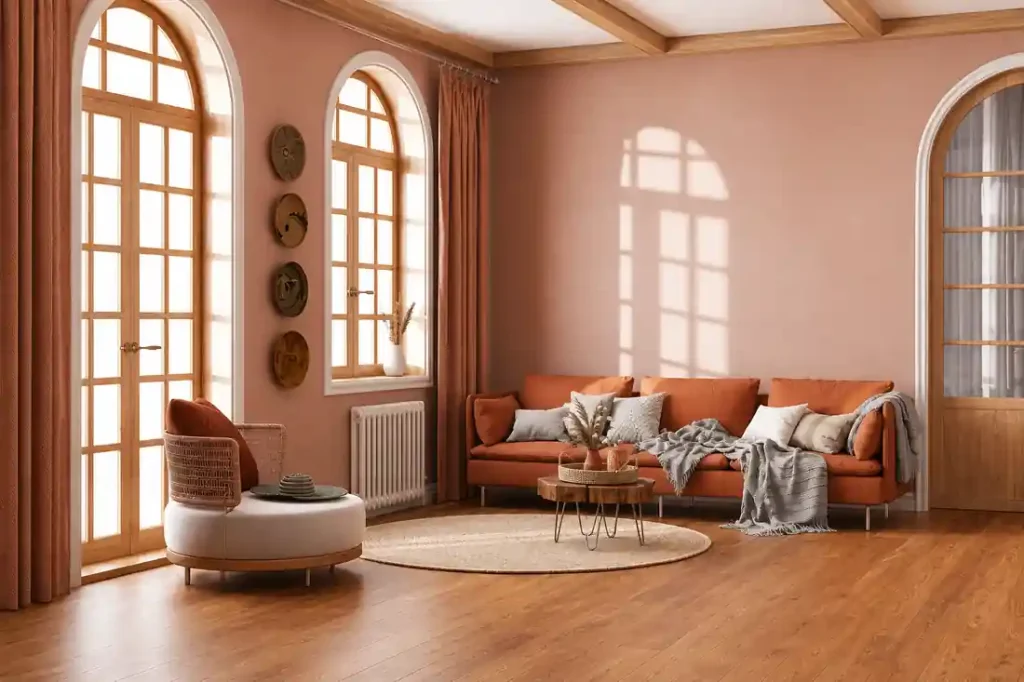
Warm tones bring life to a space. They are perfect for places where people gather, chat, eat and celebrate. Think warm, inviting living rooms where guests gather during festivals, or dining rooms where conversations last longer than meals. Use warm interior color schemes to:
• Living rooms that are too simple or too cold
• Catering spaces that need energy
• Homes where natural light is limited
Warm palettes create a feeling of closeness. That slightly cozy feeling that makes a space feel “lived in.” However, too much heat can feel heavy, especially in small rooms. A dark orange or red wall in a compact bedroom can make the space feel overwhelming over time.
Where do cool color combinations work best?
Cool tones make spaces clean, calm and visually larger. Perfect for modern apartments where every inch counts. Bedrooms, in particular, benefit from cooler interior color schemes. After a long day, you want a space that slows things down. Soft blues and greens do this naturally. They also work well in:
• Small rooms that need to appear larger
• Investigate areas that are important to focus on
• Very sunny houses (they balance the brightness)
But again, there is a downside. If you overuse cool tones, the space can start to look flat. The space can start to feel impersonal, like a hotel room that you don’t really connect with.
Real houses, real decisions
Let’s bring this into everyday life. Morning rush, you get ready, look for your keys, check your phone. A warm-toned space can really look energizing here. Late in the evening, lights dimmed, you relax. This is where cooler tones help your mind slow down.
Children study at a desk in the bedroom. A soft, fresh palette keeps distractions to a minimum. But add a little warm accent, perhaps in shelves or decor, and the space doesn’t feel dull.
Even clutter plays differently with color. Warm tones can make a room feel fuller more quickly. Cool tones tend to mask visual noise better, which is useful in homes where storage is tight and things don’t always stay perfectly organized.
This is why there is no single answer to an interior color combination.
So how to choose interior color combinations?
Start with how the room is used and ask yourself simple questions:
• Is it a space for relaxation or socialization?
• How much natural light does it receive?
• Is the room small, large, or somewhere in between?
• Does clutter accumulate easily here?
Choose your interior color combination based on your answers to the questions above. A small room with limited light? Favor cool tones, but add warmth with textures. Cushions, wood finishes, soft lighting.
A large living room that seems empty? Warm it up. But balance it with neutral tones so it doesn’t become too intense. It’s less about choosing sides and more about balancing.
How to balance your interior color schemes in a smart way?
The best spaces rarely stick to hot or cool; they mix the two. A neutral base, a dominant tone, then accents from the opposite palette to keep things interesting. For example:
• A cool, gray bedroom with warm wooden furniture
• A warm beige living room with cool-toned upholstery
• Soft blue walls combined with warm lighting
How Bonito Designs Succeeds
At Bonito Designs, color is not treated as a last minute decision. It’s part of a larger system. Their LifeDesign approach focuses on how you actually live in your home. Morning routines, work setups, storage habits, and even where things tend to pile up all fuel design.
They plan interior color schemes based on how they would interact with your home’s lighting, materials and layout. And because everything is managed in-house, from design to construction to quality checks and final delivery, there is consistency. What you see at the design stage is what appears in your home.
Hot or cool is not the real question. The real question is how you want your home to feel when you actually live in it. Book a consultation with Bonito Designs to find the interior color combination that truly matches your home and lifestyle.
PakarPBN
A Private Blog Network (PBN) is a collection of websites that are controlled by a single individual or organization and used primarily to build backlinks to a “money site” in order to influence its ranking in search engines such as Google. The core idea behind a PBN is based on the importance of backlinks in Google’s ranking algorithm. Since Google views backlinks as signals of authority and trust, some website owners attempt to artificially create these signals through a controlled network of sites.
In a typical PBN setup, the owner acquires expired or aged domains that already have existing authority, backlinks, and history. These domains are rebuilt with new content and hosted separately, often using different IP addresses, hosting providers, themes, and ownership details to make them appear unrelated. Within the content published on these sites, links are strategically placed that point to the main website the owner wants to rank higher. By doing this, the owner attempts to pass link equity (also known as “link juice”) from the PBN sites to the target website.
The purpose of a PBN is to give the impression that the target website is naturally earning links from multiple independent sources. If done effectively, this can temporarily improve keyword rankings, increase organic visibility, and drive more traffic from search results.

Related Posts
15 Stylish Balcony Decoration Ideas for Modern Urban Homes
How Home Interior Design Shapes Your Mood