Why West Facing Vastu House Is Not As Bad As You Think
@font-face { font-family: ‘Heading2Font’; src: url(‘ format(‘opentype’); }
@font-face { font-family: ‘NOTOSANSREGULAR’; src: url(‘ format(‘truetype’); }
body { font-size: 15px !important; font family: ‘NOTOSANSREGULAR’; line-height: 1.7; }
h2 { font-family: ‘Heading2Font’; font size: 23px; line-height: 32px; bottom margin: 12 px; }
h3 { font-family: ‘Heading2Font’; font size: 20px; line-height: 28px; bottom margin: 10 px; }
.toc-container { border: 1px solid #e5e5e5; padding: 20px; border-radius: 12px; background: #fafafa; margin: 20px 0; }
A house facing west is not in itself a bad omen; with proper planning aligned with Vastu, it can support comfort, stability and prosperity. Key considerations include appropriate location of the entrance, appropriate orientation of the room, balanced slopes and maintaining the northeast opening. Combining Vastu principles with practical interior design is essential to creating a home that balances tradition with modern family needs.
Ask most people if a west-facing house is a good thing and you’ll usually get a confident “no.” West-facing houses have a reputation problem, based largely on half-understood Vastu principles rather than actual knowledge. The reality is more nuanced.
West facing Vastu house does not necessarily bode ill for family homes. By following the right Vastu principles, a west-facing house can be just as harmonious as a house facing any other direction.
What principles apply to a west facing Vastu house?
Vastu Shastra for home design treats the four directions as neutral in themselves. Everyone carries particular energies that must be worked with, not avoided. The western direction is ruled by Varuna, the deity associated with water, rain and prosperity. A home that properly channels this energy is considered favorable for financial growth and family stability.
The bias against the west-facing Vastu home comes from a simpler practical problem: the afternoon sun. In most parts of India, a west-facing entrance means that the setting sun shines directly into the house during the hottest hours of the day.
So, is a west facing house good according to Vastu? The answer is yes, but good interior design is necessary to keep the house comfortable all day long.
What are the 3 key guidelines for west facing Vastu home?
Vastu for west-facing homes recommends a specific set of orientations and placements that work with directional energy rather than against it.
1. Entrance location
The main door is the most important decision when it comes to a west facing house entrance Vastu. The entrance should be well lit and unobstructed, with no large trees or pillars directly facing the door.
2. Location of the room
- Master bedroom facing southwest. It is the zone of stability and earth energy, which supports rest and relationships.
- Kitchen facing northwest or southeast. Both are considered suited to the fire elements.
- Living room in the northwest or north, which supports social energy and incoming opportunities.
- Children’s rooms work well in the west or northwest, encouraging growth and movement.
- Avoid placing the Pooja room in the south or southwest.
3. Slopes and levels
In the west facing Vastu apartment, the floor should ideally be flat or slightly sloping towards the north or east. A slope to the west or southwest is considered less favorable.
What are the common Vastu mistakes for west facing houses?
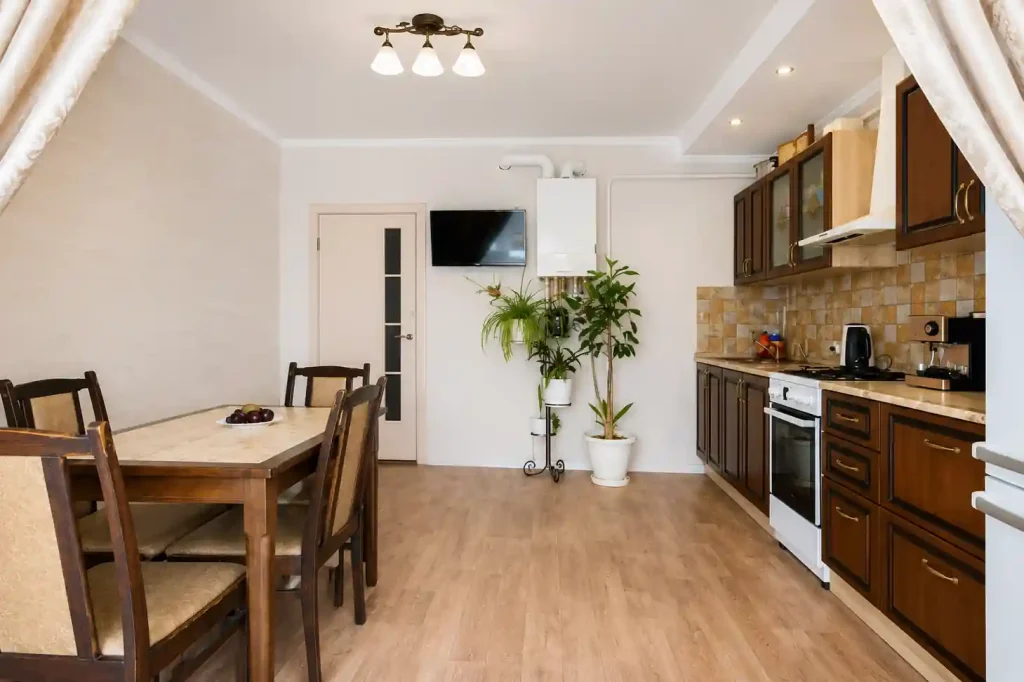
Even homeowners who are widely familiar with west facing Vastu home make some constant mistakes.
-
Block the northeast
This corner should remain as open and clear as possible. Placing heavy storage or toilets in the North East is one of the biggest Vastu mistakes. When it comes to Vastu for stairs, south, west or southwest directions are ideal, while northeast direction should generally be avoided.
-
Ignore input pada
Many families focus on the orientation of the house but don’t check where the main door is on the west wall. The difference between an auspicious pada and a less auspicious pada is a matter of a few meters and is entirely fixable at the design stage.
-
Heavy construction on the north side
The North is associated with prosperity and new energies. Overloading it with large pieces of furniture, walls or extensions removes this directional advantage.
How Bonito Designs Approaches Vastu Aligned Homes
Bonito Designs incorporates the Vastu principles of the west facing home into the design process without letting them override practical functionality. Our living design philosophy means that each home is planned based on how the family actually lives, and Vastu is treated as one of several inputs rather than a set of rigid rules that conflict with actual needs.
Through in-house execution and ISO certified processes, our team ensures that what is designed is delivered with precision, with no gap between intent and outcome.
A West Facing Home May Be Perfect for Your Family
The stigma around the west-facing Vastu home is largely unwarranted. These homes have specific guidelines to follow, like all orientations, and when those guidelines are followed, there is no reason why a west-facing home cannot be as stable, prosperous and comfortable as another.
If you are moving into a west-facing home and want the interior design to respect both Vastu principles and your family’s lifestyle, book a consultation with Bonito Designs today.
PakarPBN
A Private Blog Network (PBN) is a collection of websites that are controlled by a single individual or organization and used primarily to build backlinks to a “money site” in order to influence its ranking in search engines such as Google. The core idea behind a PBN is based on the importance of backlinks in Google’s ranking algorithm. Since Google views backlinks as signals of authority and trust, some website owners attempt to artificially create these signals through a controlled network of sites.
In a typical PBN setup, the owner acquires expired or aged domains that already have existing authority, backlinks, and history. These domains are rebuilt with new content and hosted separately, often using different IP addresses, hosting providers, themes, and ownership details to make them appear unrelated. Within the content published on these sites, links are strategically placed that point to the main website the owner wants to rank higher. By doing this, the owner attempts to pass link equity (also known as “link juice”) from the PBN sites to the target website.
The purpose of a PBN is to give the impression that the target website is naturally earning links from multiple independent sources. If done effectively, this can temporarily improve keyword rankings, increase organic visibility, and drive more traffic from search results.