Difference Between Marble and Granite: 5 Practical Comparisons
h1 { font-family: ‘Heading1Font’ !important; font size: 26px !important; } h2 { font-family: ‘Heading2Font’ !important; font size: 23px !important; } h3 { font-family: ‘Heading2Font’ !important; font size: 20px !important; display: online !important; margin: 0 !important; } body { color:#646464 !important; font size: 15px !important; }
You are about to invest thousands of dollars in remarkable flooring, countertops or wall coverings. This is not a decision about a cushion cover because once installed they will stay for years. And yet the conversation between granite and marble usually boils down to one thing: “Which is more beautiful?” »
This is the wrong question to ask and can lead to costly regrets in the long run. In Indian homes, materials aren’t just pretty. They deal with turmeric splashes, hard water, heavy furniture movements, barefoot traffic, organizing festivals and children studying on the floor.
So the real question is not “Granite or marble, which is better?” » The question is, which one corresponds to the way your house is actually lived in? Today we are going to talk about the main difference between marble and granite.
What is marble?
Marble is a natural stone formed from limestone under heat and pressure. His signature? Soft veins, subtle movement and that unmistakable depth that feels naturally luxurious.
In Indian homes, marble has long been associated with upscale living rooms and serene bedrooms. The feel is cool underfoot, which works wonderfully in warmer climates. Walk barefoot on a marble floor in May and you’ll understand why we love it. But here’s what people overlook: marble is porous and relatively softer than granite. This means it absorbs liquids more easily and may become scratched or etched if exposed to acidic substances, such as lemon juice or bathroom cleaners.
For example, in Mumbai, where rainfall is a major problem during the monsoons, marble can quickly become damaged if exposed to moisture. This is why interior designers in mumbai Do not generally recommend marble flooring for balconies or other parts of the house exposed to moisture unless special precautions have been taken to protect the stone.
What does this look like in everyday life:
- Haldi spills that leave slight shadows if not cleaned up quickly
- Dull stains in bathrooms due to constant humidity
- Light scratches from movement of furniture
Marble rewards careful ownership. It elevates a space, but it expects a certain discipline in return.
What is granite?
Granite is an igneous rock formed from cooled magma. It is denser, harder and significantly less porous than marble. Visually, granite tends to have a grainier, more speckled appearance. It may not have the soft feel of marble, but it brings a feeling of strength and permanence to your home.
Concretely, granite:
- Better resists scratches
- Handles heat with more confidence
- Absorbs less moisture
- Requires less frequent sealing
In Indian kitchens, where pressure cookers whistle daily and hot tawas move from stove to counter, granite seems safer. In busy areas where chairs scrape and children play, it holds up longer without visible wear.
What is the difference between marble and granite?
Now let’s talk about the real difference between marble and granite:
-
Porosity and stain resistance
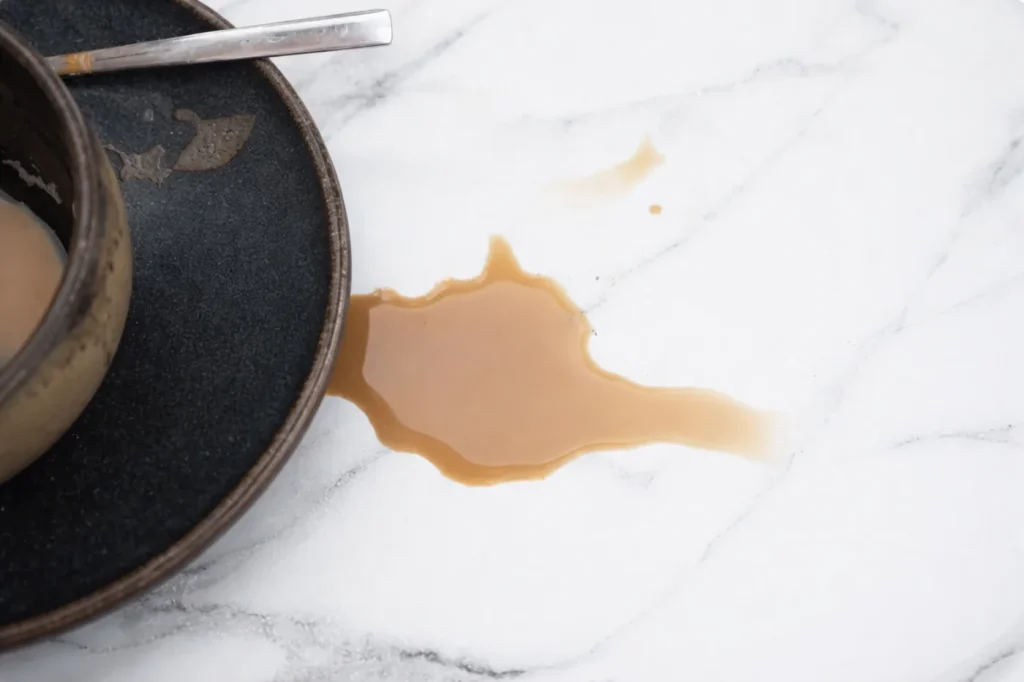
Marble is more porous than granite. This means it can absorb oil, coffee or turmeric if left unattended. Sealing helps, but it doesn’t make him invincible. On the other hand, granite is denser and more resistant to stains. So, in a heavily used kitchen, this difference becomes evident within a few months. If your household cooks daily with oil and spices, granite reduces the stress of maintenance. However, if cooking is lighter and cleaning is immediate, marble may still work. Choosing the wrong material for your kitchen can quickly result in hefty expenses within a few years. Therefore, it is crucial to choose between marble and granite for long-term durability.
-
Scratch and surface durability
Marble is softer and this is the main difference between marble and granite. Drag a metal stool repeatedly and you’ll likely see marks over time. Granite is significantly harder. It better tolerates furniture movements and accidental abrasions. In homes with children, pets, or frequent furniture rearrangement, granite generally ages more gracefully.
-
Heat tolerance
Granite tolerates heat better. You can put a hot pan down briefly without panic. Marble is more sensitive to thermal shock. Repeated exposure to heat may affect its finish. In Indian kitchens, this is not a small detail. Additionally, you also need to watch out for heat damage in the exterior parts of your home. If you have a balcony or terrace, even perfectly waterproofed marble can be damaged if temperatures soar.
-
Maintenance cycles
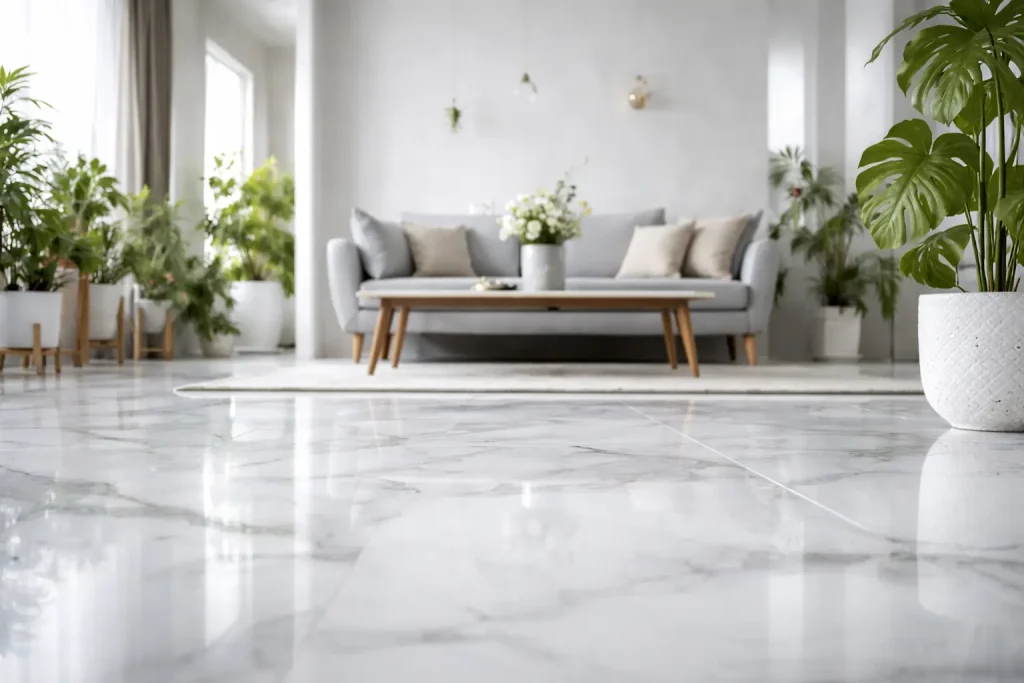
Both stones require sealing, but marble generally needs it more frequently. Marble floors may also require periodic polishing to restore their shine. Granite retains its finish longer with less intervention. If you don’t want to keep up with maintenance cycles, granite offers lower maintenance. Note, however, that this does not mean that granite requires no maintenance. Granite also needs maintenance and cleaning, just like marble, and misuse of any stone, no matter how durable, will eventually result in damage and repair costs.
-
Performance per part
• Kitchen counters: Granite performs best in everyday cooking conditions.
• Bathroom floors and wet areas: Granite resists humidity more effectively. Marble requires strict discipline when it comes to sealing.
• Living room flooring: Marble offers elegance and cool comfort underfoot. Granite offers durability.
• High traffic areas: Granite supports heavy use with fewer visible marks.
The smartest approach is not to blindly choose a material for the entire house. This involves mapping usage room by room and taking into account the difference between marble and granite prices.
Choosing the right tile: what to check before buying
Before you sign, inspect more than just the color.
- Thickness consistency
- Surface uniformity
- Visible cracks or fractures
- Quality of resin processing
- Edge finishing
- Batch variation
View tiles in natural light, not just showroom spotlights, learn about waterproofing recommendations and understand long-term care. A lower price per square foot means nothing if the quality of the slab is compromised.
How Bonito Designs helps you choose with clarity
At Bonito Designs, decisions between granite and marble are not isolated moments in a showroom. They are part of a broader LifeDesign philosophy that maps the day-to-day functioning of your home. Before recommending marble or granite, the design team considers:
- Your cooking habits
- Family size
- Traffic intensity
- Cleaning habits
- Climatic exposure
- Furniture layout
A kitchen that uses heavy oil-based cooking receives a different recommendation than a light-duty breakfast bar. A living room intended for formal accommodation is treated differently than one in which children build Lego cities on the floor. As execution is managed in-house, quality is controlled end-to-end. From design planning to tile selection, installation, polishing and final quality control, everything follows ISO certified processes.
This means that what you approve on paper translates accurately on site. With extensive experience in designing Indian apartments and independent houses, Bonito Designs understands how materials behave in real-world conditions, not just in mood boards. The goal is simple: your stone should look elegant not just from day one, but five years from now.
The last word
The difference between marble and granite isn’t about which is better or worse. They are more suitable for different lifestyles. The smartest choice isn’t the one that looks the most spectacular in a showroom. It’s the one that matches how your home is actually experienced.
If you’re making a high-investment decision and want clarity without confusion, book a consultation with Bonito Designs. Let us help you choose a material that fits your life.
PakarPBN
A Private Blog Network (PBN) is a collection of websites that are controlled by a single individual or organization and used primarily to build backlinks to a “money site” in order to influence its ranking in search engines such as Google. The core idea behind a PBN is based on the importance of backlinks in Google’s ranking algorithm. Since Google views backlinks as signals of authority and trust, some website owners attempt to artificially create these signals through a controlled network of sites.
In a typical PBN setup, the owner acquires expired or aged domains that already have existing authority, backlinks, and history. These domains are rebuilt with new content and hosted separately, often using different IP addresses, hosting providers, themes, and ownership details to make them appear unrelated. Within the content published on these sites, links are strategically placed that point to the main website the owner wants to rank higher. By doing this, the owner attempts to pass link equity (also known as “link juice”) from the PBN sites to the target website.
The purpose of a PBN is to give the impression that the target website is naturally earning links from multiple independent sources. If done effectively, this can temporarily improve keyword rankings, increase organic visibility, and drive more traffic from search results.