Materials and finishes used by designers
ol li { color: #000000 !important; }
ul li::marker { color: #000000 !important; }
h1, h2, h3, h4, h5, h6 { font-weight: 400 !important; } ul, ol { color: black; }
h1 { font-family: ‘Heading1Font’ !important; font size: 26px !important; }
h2 { font-family: ‘Heading2Font’ !important; font size: 23px !important; } body { color:#646464 !important; font size: 15px !important; }
h3 { font-family: ‘Heading2Font’ !important; font size: 20px !important; display: online !important; margin: 0 !important; }
In most duplex homes, the staircase is right in the middle of everything. You see it as soon as you enter. Guests lean on it at house parties, children run up and down it before school, and festival decor often surrounds its railing. And yet, many homeowners treat it like unused space.
If you are looking for a duplex staircase design, you need to understand that the staircase is not an in-between area. It is the strongest visual link between two floors. Done well, it makes your home feel cohesive, but done poorly, it divides your home into two unrelated styles. Let’s see how the thoughtful design of the interior stairs brings the two floors together.
Why Stairs Decide Whether Your Duplex Looks Upscale
In urban duplex apartments, especially in cities like Mumbai or Bangalore, the staircase is visible from the living room. That means it’s still part of the visual story. If your main floor features warm wood tones and the staircase suddenly changes to glossy black granite with steel railings, the flow stops. The eye immediately notices the change.
Solid home interior staircase designs create continuity. Designers align materials, repeat finishes and bring visual cues up. For example:
- If your TV stand has fluted wood panels, echoing that texture on the staircase wall adds cohesion.
- If your floor is marble, finishing your staircase in the same shade avoids visual disruption
The goal is simple: When someone stands in the living room and looks up, your staircase design should be intentional and cohesive.
How Designers Create Visual Continuity in a Duplex Staircase Design
Good stair design involves both aesthetics and structural alignment. Designers consider:
- Sight lines from the main door
- The angle from the sofa
- What is visible from the dining room
- How the upper floor passage connects visually
In compact duplex apartments in Mumbai, where living spaces are often open plan, the staircase acts as a spine. If it looks bulky or mismatched, the whole house seems cramped. The best interior designers in Mumbai create continuity by following a few simple yet effective guidelines:
- Repeating the same finish or tone of flooring
- Match the metal of the railing to the hardware elsewhere
- Align wall colors between floors
- Subtle extension of ceiling treatments towards the stair area
These changes may seem small, but they make a big difference during the interior staircase design process.
-
Color Strategy: Game Changer for Interior Staircase Design
Color choices in interior staircase design affect the size and brightness of your home. In Indian cities where natural light is often limited to one side of the house, a dark staircase can absorb light and make the space feel narrower. Lighter finishes, such as soft beige stone, warm oak, matte greige laminates, reflect light and make vertical circulation airy. But the contrast is not always bad; it just needs balance.
A heavy black staircase in a 1,500 square foot Bangalore duplex can overwhelm the room. However, a darker railing profile paired with lighter treads can add definition without visual weight. You also have to think about daily life. Your morning routine involves movement, and a visually calm staircase reduces mental clutter. Color is not just aesthetic; it’s an effective way to create a relaxing space.
-
Lighting integration
Built-in step lights, hidden under-step light strips or wall washers make stairs safer and more dramatic without overwhelming the space. In interior staircase design, lighting can be more than just decoration; this can be a tool for defining depth and improving the perceived scale of your room.
Additionally, smart lighting can also improve the functionality of your staircase. Programmable LED systems allow you to adjust brightness based on time of day or usage, improving energy efficiency while maintaining comfort. Carefully planned lighting will not only highlight the architectural details of your home, but will also transform the staircase into a focal point of your interior.
-
Material Combinations That Work in Indian Homes
Indian homes face humidity, dust, heavy foot traffic and barefoot movement. The selection of materials must take this into account. Here are some staircase design ideas that work well:
•Wood + Metal
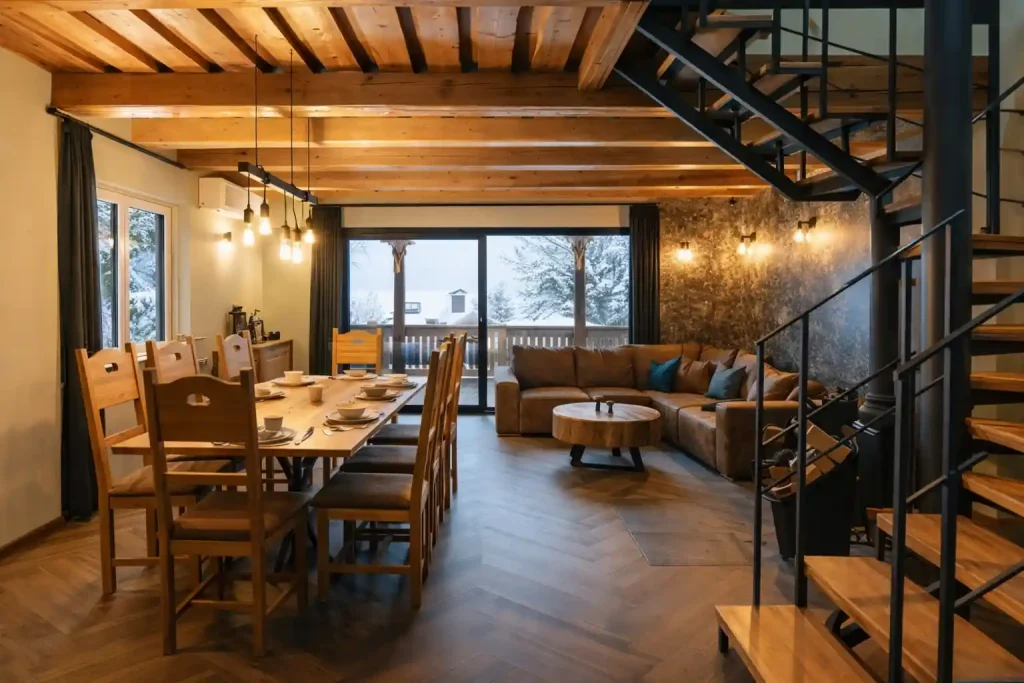
Warm wooden steps combined with thin banisters in matte black or brushed brass are both contemporary and durable. Wood adds warmth; metal adds structure. Choose treated, scratch-resistant finishes to withstand daily wear and tear.
•
Stone + Glass
Marble or granite steps with glass balustrades make compact duplexes in Mumbai feel larger. Glass allows light to flow and keeps sight lines open. However, this interior staircase design works best in homes where maintenance discipline is high, as glass requires regular cleaning to remain top quality.
•
Microcement finishes
Minimal and modern, polished concrete creates seamless monolithic staircases. It works well in contemporary homes in Bangalore city, aiming for understated elegance. It also resists moisture better than many think when properly sealed.
•
Matte laminates or engineered surfaces
Both economical and stylish, matte laminates are practical for families with children or pets. They reduce the risk of slipping and withstand intensive use well. The choice of materials must correspond to the lifestyle. If your staircase also serves as seating during gatherings, the edge details and thickness of the steps are even more important.
Details that enhance the design of interior stairs
A staircase may seem pretty at first glance. But premium design is seen in the details.
- Railing Profiles: Thin, well-proportioned profiles look nice, while thicker railings look old-school.
- Tread Thickness: Thin, flimsy treads reduce visual impact, while appropriate thickness provides structural confidence.
- Nose Treatment: A rounded or sharp nose affects both safety and aesthetics. This also impacts how the staircase ages.
- Wall finishes: Blank walls along the stairs are missed opportunities. Textured panels, subtle fluting or placement of artwork can enhance the vertical experience.
Everyday reality: design of interior stairs for real use
Real houses differ from the flashy pictures you can find online. Real houses don’t just need to be beautiful; they need to feel good. After all, your home should fit the way you live. For example, in duplexes in Mumbai, stair landings often become temporary storage areas, school bags are left there, laundry waits on a step and pets nap halfway up. These aspects of everyday life must be taken into account when designing smart interior stairs.
At Bonito Designs, stairs are not treated as stand-alone structures. They are designed as part of a complete LifeDesign system. Before finalizing the design of a duplex staircase, the team maps:
- Entrance sightlines
- Continuity of the floor finish
- Alignment of upper and lower floors
- Lighting layers on both levels
- Structural constraints in urban developments
With extensive experience in urban duplex apartments and independent houses in Bangalore and Mumbai, Bonito understands the behavior of Indian building structures. Since the execution of staircase design ideas is handled in-house, the details remain precise. ISO certified processes ensure that material selection, manufacturing, installation and quality controls meet strict standards.
The workflow remains streamlined, from design to construction, quality control and final handover. No last minute compromises, no mismatched finishes. Book your consultation today!
PakarPBN
A Private Blog Network (PBN) is a collection of websites that are controlled by a single individual or organization and used primarily to build backlinks to a “money site” in order to influence its ranking in search engines such as Google. The core idea behind a PBN is based on the importance of backlinks in Google’s ranking algorithm. Since Google views backlinks as signals of authority and trust, some website owners attempt to artificially create these signals through a controlled network of sites.
In a typical PBN setup, the owner acquires expired or aged domains that already have existing authority, backlinks, and history. These domains are rebuilt with new content and hosted separately, often using different IP addresses, hosting providers, themes, and ownership details to make them appear unrelated. Within the content published on these sites, links are strategically placed that point to the main website the owner wants to rank higher. By doing this, the owner attempts to pass link equity (also known as “link juice”) from the PBN sites to the target website.
The purpose of a PBN is to give the impression that the target website is naturally earning links from multiple independent sources. If done effectively, this can temporarily improve keyword rankings, increase organic visibility, and drive more traffic from search results.